Summary
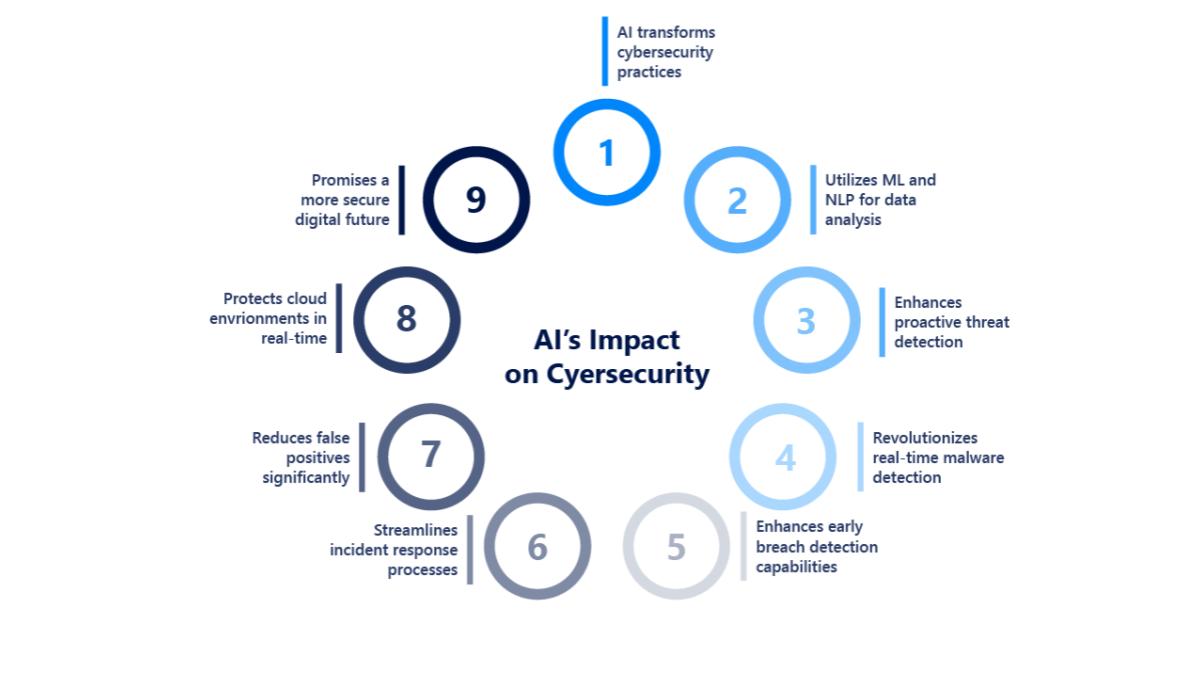
AI’s impact on cybersecurity is significant, offering powerful defensive tools like enhanced threat detection, faster incident response, and predictive analytics, while also presenting new risks like sophisticated AI-powered attacks and challenges in model security.
For defense, AI analyzes vast datasets to identify anomalies and automate responses, such as isolating compromised systems. For offense, attackers use AI to create more convincing phishing attempts and adapt attacks in real-time, leading to an ongoing arms race.
Source: Gemini AI Overview – 10/24/2025
News
The maturing AI landscape increases the likelihood that multiple models, and agents, will need to work alongside each other. And this type of “swarm” orchestration introduces a host of additional security concerns that need to be addressed to ensure the integrity of an organization’s security.
AI agents have become an increasing force in LLM-powered deployments in the workplace. Autonomous AI agents, which are sold under the premise that they can work in a mostly self-directed fashion and make “decisions” about what to use next, are used in data analysis, build process automation, software development (to create and manage code), and more. As businesses make the decision to lean more into this technology, it becomes increasingly likely that multiple agents used for different processes will come into contact with each other.
This becomes an even greater concern as open source self-hosted agents like OpenClaw (aka MoltBot) hit the scene — a concern that has come to somewhat humorous fruition in the form of quasi-social-media platform Moltbook, leading to the rise of orchestration products such as GitHub’s Agent HQ for software development, which includes features like code review and a single command center to manage multiple agents simultaneously. Countless other vendors, such as Zapier and IBM, offer orchestration tools for various swarm use cases as well.
Roey Eliyahu, CEO and co-founder of Salt Security, tells Dark Reading that while agent orchestration can enable agents to work on parallel tasks simultaneously and specialize, the practice introduces multiple security risks, such as credential sprawl, over-privileged access to tools, and more integrations that may be connected to sensitive data.
“Multiagent orchestration is powerful because it parallelizes work, but it also parallelizes risk,” he says. “The security job is to keep every agent narrowly scoped, heavily audited, and blocked from high-impact actions without explicit approval.”
Enable AI. Reduce cybercrime. Unleash abundance
Perhaps the biggest near-term AI opportunity is reducing cybercrime costs. With serious attacks unfolding almost daily, digital insecurity’s economic weight has truly grown out of control. Per the European Commission, global cybercrime costs in 2020 were estimated at 5.5 trillion euros (around $6.43 trillion). Since then, costs have only spiraled. In 2025, Cybersecurity Ventures estimates annual costs will hit $10 trillion, a showstopping 9 percent of global GDP. As Bloomberg notes, global cybercrime is now the world’s third-largest economy. This is truly an unrivaled crisis.
Thankfully, it is also an unrivaled opportunity. Given the problem’s sheer scale, any technology, process, or policy that shaves off just a sliver of these cyber costs has percentage point growth potential. Reduce cyber threats, and abundance will follow.
The immense potential of software translation is far from the only near-term AI opportunity. Already, studies have proven AI can automate vulnerability detection—that is, AI can discover serious security issues without human involvement. Soon, software could be proactively secured even before it ships. Likewise, advances in AI task completion suggest software patches could soon be automated. In a few years, software fixes could be generated and shipped just moments after insecurities are discovered. Beyond, we find countless other possibilities in advanced cyber intelligence, threat detection, real-time response, and more.
tl;dr sec, – April 9, 2026
The Upshot
Yesterday, Anthropic announced a large-scale initiative to essentially wall off its own latest frontier AI model with yellow caution tape.
The unreleased model, called Claude Mythos Preview, is already so powerful a cybersecurity tool that it identified thousands of ‘high-severity’ vulnerabilities across every major operating system and web browser, including the one you’re probably using to read this article, Anthropic said.
In response, Anthropic announced Project Glasswing, an initiative looping in more than 40 companies like Amazon, Apple, Google, Microsoft, NVIDIA and JPMorgan Chase to early Mythos Preview access, along with $100 million in usage credits, so they could start to address these weak links.
For startups, that means business as usual, right? The coalition of the giants is on it. No need to worry about hypothetical issues now being addressed by some of the world’s biggest cybersecurity teams.
The reality: when it comes to cyber risks, Anthropic’s already-released tools, including the hyper-popular Claude Code, are plenty powerful as it is – as demonstrated by a new report out today from a cybersecurity startup, LayerX.
tl;dr sec, – April 9, 2026
New, more powerful artificial intelligence (AI) models are announced pretty regularly these days: the latest version of ChatGPT or Claude or Gemini always has new features and new capabilities that its makers are eager for customers to try out.
But now Anthropic has announced a new model with great fanfare, but is only giving access to a select handful of users. In what the New York Times calls a “terrifying warning sign” of the model’s power, the company has instead started an initiative called Project Glasswing to use the model for good instead of evil.
Why? Early reports indicated that the model, with instruction, had been able to move outside a contained testing “sandbox” and send an email to a researcher.
A little alarming, perhaps. But more significantly, Anthropic claims Mythos has uncovered software vulnerabilities and bugs “in every major operating system and every major web browser”.
Finding hidden vulnerabilities
In one remarkable example, the model found a flaw in OpenBSD, a security-focused operating system used in firewalls and routers, which had gone undetected for 27 years. According to Anthropic, it also found a 16-year-old vulnerability in FFmpeg, a little-known but widely used behind-the-scenes piece of software that helps computers, apps, and websites handle audio and video files.
Anthropic also says Mythos found several vulnerabilities in the kernel of the Linux operating system, and chained them together in a way that could give an attacker complete control of a machine.
Anthropic’s internal assessment of the model highlights both its technical promise and the need for vigilance.
The report outlines a hypothetical risk that an advanced AI might exploit its access within an organisation, but concludes that the model poses a very low threat of harmful autonomous actions. In other words, it is unlikely to “go rogue” – but may follow human directions to do things that cause harm.
Why Anthropic is keeping Mythos off‑limits
Anthropic says it decided not to release the model publicly because of its capabilities and the potential risks it poses. At the same time, the company launched Project Glasswing.
The effort brings together a broad coalition of tech companies such as Microsoft, Amazon, Google, Apple, Cisco and NVIDIA, open-source organisations such as the Linux Foundation, and major financial actors such as JPMorganChase, to channel Mythos towards cyber defence rather than misuse.
The idea is to give defenders a head start to find and fix weaknesses in critical software before similar AI capabilities become widely available to attackers.
Reading between the lines of Anthropic’s messages
This is not the first time an AI firm has decided a model was too powerful to release widely. In 2019, years before the ChatGPT era, OpenAI did something similar with its (now quite primitive-looking) GPT-2 model. (Dario Amodei, now chief executive of Anthropic, was a key OpenAI researcher at the time.)
However, this doesn’t mean these announcements should not be taken seriously.
Anthropic has published unusually detailed material for a model it is not widely releasing. Reports suggest US authorities convened major US bank CEOs in Washington to discuss the cyber risks associated with Mythos.
However, we should exercise caution about Anthropic’s claims, because outsiders cannot yet verify most of the underlying evidence. Anthropic says more than 99% of the vulnerabilities it found are still undisclosed because they have not yet been patched. That is responsible disclosure, but it also means the public is being asked to trust a great deal it cannot fully inspect.
What Mythos could mean for the future of cybersecurity
Cybersecurity failures can have real effects on individuals. In Australia, the Optus breach exposed the personal information of about 9.5 million people. In another case, stolen Medibank records included sensitive health information, and some of the data was later released on the dark web.
These were not just database problems. They became crises of privacy, identity and trust.
That is why Mythos matters. Mythos and other AI models like it could change the basic economics of cybersecurity.
In the past, serious vulnerabilities have often stayed hidden simply because nobody found them. And this in turn was because finding them took rare skill, patience, and time.
If models like Mythos can scan the hidden plumbing of the internet – operating systems, browsers, routers, and shared open-source code – at an unprecedented scale, then what is now specialised hacking could become a routine and automated process.
For organisations and software development firms, Mythos is a double-edged sword. It could rapidly uncover hidden flaws in their own code, but it also raises the fear attackers could find the vulnerabilities first.
The implications reach well beyond tech companies. Much of that underlying, invisible software supports many of the services people rely on every day, from electricity and water to airlines, banking, retail and hospitals.
What now?
So far, cybersecurity and software companies have been remarkably quiet in public about Anthropic’s Mythos. Many firms appear to be waiting and watching, unwilling to signal their stance in case the model exposes weaknesses in their own systems.
But developments like Mythos are a reason to stop treating cybersecurity as somebody else’s problem. For now, for individuals, the response is simple: basic cyber hygiene matters more than ever.
Update phones, laptops, browsers and routers. Replace unsupported devices. Use a password manager. Turn on multi-factor authentication. Do not ignore patch notices.
Those are the immediate steps. Beyond them lies a harder set of questions about AI and cyber security – about who gets access to powerful AI models, who oversees their use, and who decides what counts as the “right hands”.
About
Benefits of AI
Enhanced threat detection and analysis
- Faster and more accurate detection: AI can analyze massive volumes of security data in real-time to identify anomalies and malicious activity that human analysts might miss. For example, AI can detect unusual login patterns, strange network traffic, or abnormal user behavior.
- Reduced false positives: AI models can be trained to distinguish between genuine threats and benign activities, significantly reducing the number of false alarms that security teams must investigate.
- Predictive analytics: By analyzing historical data and threat intelligence feeds, AI can identify emerging attack patterns and predict potential vulnerabilities before they are exploited.
Automated response and improved efficiency
- AI-driven systems can automatically respond to threats, such as isolating infected devices or blocking malicious IP addresses, to prevent spreading and minimize damage. AI also automates repetitive tasks, allowing human analysts to focus on complex issues and potentially reducing costs.
Advanced defense mechanisms
- AI can analyze user behavior to detect insider threats or compromised accounts, scan for vulnerabilities and prioritize remediation, and enhance authentication through behavioral biometrics.
Source: Gemini AI Deep Dive Overview – 10/24/2025
Risks and challenges
New and advanced attack methods
- Attackers use AI for sophisticated social engineering, like personalized phishing and deepfakes. They also create evasive malware that adapts to traditional defenses and automate large-scale attacks.
Threats to AI systems themselves
- AI systems are vulnerable to attacks like data poisoning, where malicious data is used to train models incorrectly, and adversarial AI, which uses crafted inputs to confuse models. Biased training data can also lead to security blind spots.
Implementation and operational challenges
- Implementing and maintaining AI security tools can be costly and complex, requiring specialized resources. Over-reliance on AI can also reduce human vigilance, making organizations vulnerable to new threats. Ethical concerns around privacy and data collection, as well as the “black box” nature of some AI, also present challenges.
Research
AI has a dual role in cybersecurity: acting as a powerful defensive tool while also being exploited by adversaries for more sophisticated attacks. Top research projects focus on using AI to enhance defensive capabilities and developing countermeasures to malicious AI use.
1. Adversarial AI and defensive AI models
This field studies how attackers can manipulate or deceive AI models and develops countermeasures to defend against these “adversarial attacks”.
- Offensive research: Researchers explore techniques like “poisoning attacks,” where manipulated training data creates vulnerabilities, or “evasion attacks,” which fool a deployed model into misclassifying malicious input.
- Defensive research: Projects focus on “adversarial training,” which exposes models to malicious examples during development to make them more robust. This research is crucial for AI in critical systems, like autonomous vehicles and healthcare.
2. Automated malware detection and reverse engineering
Researchers use machine learning and deep learning to identify and classify new, unknown malware at a speed and scale impossible for human analysts.
- Real-world example: Microsoft’s “Project Ire” is a prototype AI agent designed to autonomously detect, classify, and reverse-engineer malware, freeing up human analysts for more complex threats.
- Advanced methods: Current research explores deep learning techniques, including Convolutional Neural Networks (CNNs) and Recurrent Neural Networks (RNNs), to analyze file behavior and system changes.
3. Behavioral analytics for insider threat detection
AI is used to build a baseline of normal user and system activity to identify unusual or anomalous behavior that could indicate a threat from within an organization.
- Anomalous activity detection: An AI system might flag an employee who suddenly begins accessing sensitive files late at night or logs in from an unusual location. This approach adapts to normal behavioral shifts and is less prone to the high false positives of static, rule-based systems.
- Insider risk prevention: The research helps organizations detect accidental data misuse, compromised accounts, or malicious insider actions that are often difficult to spot with traditional tools.
4. Privacy-preserving AI, including federated learning
This research focuses on how AI can be developed and used while protecting user privacy, which is a major ethical concern as AI systems rely on large datasets.
- Techniques: Researchers are advancing techniques like “federated learning,” which allows a model to be trained across multiple decentralized devices without exchanging the raw data, thereby preserving privacy.
- LLM privacy: A key area of concern is Large Language Models (LLMs), with research focusing on preventing the leakage of sensitive data used in their training.
5. AI for security automation and orchestration (SOAR)
SOAR platforms use AI to automate complex security tasks, integrate disparate security tools, and orchestrate incident responses. This research aims to reduce response times and the burden on human analysts.
- Real-time response: Research explores autonomous response capabilities that allow AI systems to automatically quarantine infected endpoints or block malicious traffic the moment a threat is detected.
- Streamlining operations: Projects develop AI-driven workflows for threat detection, vulnerability management, and other functions to boost efficiency.
6. AI-powered phishing and social engineering defense
With generative AI, attackers can craft highly convincing and personalized phishing emails and deepfake videos. This has spurred research into new defensive strategies.
- NLP for phishing detection: Researchers use Natural Language Processing (NLP) to analyze the tone, content, and structure of emails to detect sophisticated phishing attempts that traditional filters miss.
- Deepfake detection: Projects focus on developing tools to identify and flag AI-generated deepfake audio and video, especially in scenarios involving financial transfers or sensitive communications.
7. Quantum-resistant cryptography and AI
Researchers are working on new encryption methods that can withstand quantum computing, which could potentially break current cryptography. AI is playing a vital role.
- AI for cryptographic design: Research uses AI to analyze how quantum computers might attack existing systems and assist in the design of new, more secure cryptographic methods.
- Post-quantum standards: This area is critical as government agencies, like IBM, predict the need to prepare for post-quantum cryptography standards by 2025.
8. AI for IoT and cyber-physical systems security
The proliferation of IoT devices and cyber-physical systems (like smart grids and self-driving cars) has created new attack vectors. Researchers are using AI to protect these interconnected systems.
- Anomaly detection: AI systems monitor network traffic and behavior patterns in industrial control systems to detect anomalies that may indicate a targeted attack.
- Proactive measures: Research explores proactive methods to mitigate cybersecurity challenges in IoT-based networks, such as those used in smart healthcare.
9. AI for threat intelligence and predictive analytics
By processing vast amounts of historical security data and external threat intelligence feeds, AI models can predict future threats and vulnerabilities.
- Predictive defense: AI-driven predictive analytics enable organizations to move from a reactive security posture to a more proactive one, strengthening defenses before an attack occurs.
- Threat prioritization: Projects focus on using AI to prioritize threats based on potential impact and exploitability, helping security teams focus their resources effectively.
10. AI for vulnerability management
This research applies AI to the process of identifying, prioritizing, and remediating software vulnerabilities.
- Automated scanning: AI automates vulnerability scanning and assessment, especially in complex cloud and multi-cloud environments.
- Intelligent prioritization: By analyzing risk factors, AI can help organizations prioritize which vulnerabilities to fix first, focusing on the most critical issues with the highest potential impact.
Innovations
Drawing on recent innovations, research, and industry trends, here are ten of the most significant innovations involving AI and cybersecurity according to Gemini AI Deep Dive:
1. Generative AI (GenAI) for enhanced social engineering
GenAI is advancing the realism and volume of cyberattacks, particularly through highly convincing social engineering and phishing campaigns.
- For attackers: Threat actors use large language models (LLMs) to craft personalized and grammatically flawless phishing emails, text messages, and voice calls (vishing) that are designed to bypass traditional filters and human scrutiny.
- For defenders: AI-powered security solutions use machine learning and natural language processing (NLP) to detect sophisticated social engineering attempts by analyzing metadata, sender behavior, and linguistic cues that deviate from established norms.
2. AI-powered malware and adaptive defense
Cybercriminals are using AI to generate more sophisticated and evasive malware, while defenders are using AI to analyze and combat it in real time.
- For attackers: AI-driven malware can use polymorphic techniques to constantly alter its code, evading signature-based detection. It can also mimic legitimate software to hide its malicious activity and adapt its behavior based on the environment it finds itself in.
- For defenders: AI-powered behavioral analysis and sandboxing observe how files and processes act in real-time. This can reveal malicious intent even when the malware’s code is new or disguised.
3. Predictive threat intelligence
AI moves cybersecurity from a reactive stance to a proactive one by predicting future attack trends and vulnerabilities based on historical data and emerging patterns.
- AI systems analyze massive datasets—including threat feeds, network telemetry, and dark web activity—to forecast likely attack vectors and actor tactics, techniques, and procedures (TTPs).
- For instance, predictive AI can issue a targeted warning to a financial institution about a specific phishing campaign based on patterns observed in another region.
4. Autonomous security operations
Agentic AI and autonomous systems are being developed to independently handle security tasks and respond to threats without continuous human oversight.
- Agentic AI for SOAR: In Security Orchestration, Automation, and Response (SOAR) platforms, AI agents can fully automate incident triage, alert enrichment, and response execution by mimicking human workflows and decision-making.
- Robotics for physical security: AI-powered autonomous patrol units, like the
Knightscope K5
, use cameras, AI analytics, and sensors to patrol large areas, detect anomalies, and alert human teams.
5. Explainable AI (XAI) for threat analysis
XAI addresses the “black box” problem of traditional AI models by providing human-readable explanations for its security decisions. This builds trust and helps analysts understand why a specific activity was flagged as a threat.
- By making the reasoning transparent, XAI helps security teams validate AI alerts, debug models, and comply with regulations that require accountability for AI-driven decisions.
- XAI is used in areas like threat detection, incident response, and vulnerability assessment, where understanding the AI’s logic is critical for effective action.
6. AI-driven network traffic analysis
AI enhances network security by constantly monitoring network traffic, detecting anomalies, and identifying suspicious behaviors that traditional, rule-based systems might miss.
- Using machine learning and neural networks, AI can learn what constitutes normal network activity, enabling it to detect emerging or zero-day threats by flagging subtle deviations.
- These systems can perform real-time analysis, enabling faster detection and response times crucial for mitigating threats like Distributed Denial of Service (DDoS) attacks.
7. AI in identity and access management (IAM)
AI is transforming IAM by enabling continuous monitoring, anomaly detection, and adaptive authentication for both human and machine identities.
- Risk-based authentication: AI assesses user and device behavior in real time, adjusting authentication requirements based on the assessed risk level. For example, a login attempt from an unusual location might trigger multi-factor authentication (MFA).
- Zero trust implementation: AI helps enforce zero-trust principles by continuously verifying every access request, identifying anomalous behavior, and ensuring least-privilege access is maintained.
8. LLMs for threat hunting and incident response
LLMs are being integrated into security platforms as “copilots” to assist security analysts by automating repetitive tasks and synthesizing vast amounts of data.
- LLMs can accelerate threat hunting by automatically analyzing logs, incident reports, and threat intelligence to identify attack patterns and map them to frameworks like MITRE ATT&CK.
- They can also help generate incident summary reports and suggest remediation steps, freeing human analysts to focus on more complex tasks.
9. Adversarial AI for attack and defense
In an AI “arms race,” attackers use adversarial AI to trick AI defense models, while security researchers develop countermeasures to harden their own systems against these manipulative techniques.
- Attacks: Adversarial techniques can manipulate a model’s input data—for example, by slightly altering a file to make a malware detection model misclassify it as benign.
- Defenses: Defenders use techniques like adversarial training, where models are exposed to deceptive data during training, to make them more robust and resilient against manipulation.
10. AI-powered software supply chain security
With attackers increasingly targeting vulnerabilities in third-party vendors and open-source code, AI is being used to proactively secure software development pipelines.
- AI Security Posture Management (AI-SPM) solutions continuously monitor developer activity, AI models, and code repositories to flag risks like exposed endpoints or prompt injection vulnerabilities.
- These platforms use AI to scan for vulnerabilities, enforce security policies, and automate remediation actions throughout the development lifecycle.
Projects
Some of the most innovative projects in AI and cybersecurity focus on creating advanced defenses that learn and adapt in real-time, often using generative AI to stay ahead of malicious actors. These projects range from autonomous malware analysis to developing defenses against AI-powered disinformation.
Autonomous malware and threat analysis
Companies like Microsoft and Deep Instinct are developing AI-driven systems that can perform autonomous reverse-engineering of malware and respond to zero-day attacks in milliseconds.
- Microsoft Project Ire: An AI agent that uses large language models (LLMs) and reverse engineering tools to autonomously investigate and classify malware.
- Deep Instinct’s DIANNA: A generative AI-powered tool that acts as a virtual team of malware analysts to provide real-time, in-depth analysis of threats.
2. Deepfake and social engineering defense
Attackers use sophisticated deepfakes and AI-generated text to create highly convincing phishing campaigns and fraudulent schemes. Projects are underway to build equally advanced defenses.
- Deepfake detection frameworks: Researchers at Virginia Commonwealth University and Old Dominion University are developing an “Uncertainty-Aware Deepfake Detection Framework” to address the growing challenge of detecting sophisticated deepfakes.
- AI for social engineering awareness: Projects use AI to create personalized, AI-generated training scenarios that help employees recognize and defend against social engineering attacks, such as deepfake impersonations of senior executives.
3. AI-native threat intelligence
This innovation moves beyond using AI to simply enhance existing security tools. Instead, the AI itself is responsible for generating, analyzing, and contextualizing threat intelligence at machine speed, allowing for a more autonomous defense model.
- AI-native platforms: Companies like SOC Prime are building ecosystems with AI co-pilots trained on massive, proprietary datasets to analyze new threat vectors and automate threat-hunting operations.
4. Advanced fraud detection
Financial institutions are using AI and behavioral biometrics to detect increasingly sophisticated fraud in real-time.
- Multi-modal fraud analysis: Systems developed by companies like Feedzai use machine learning to monitor real-time transactions, while others, such as BioCatch, analyze user behavioral patterns (typing speed, mouse movements) to identify and flag anomalies indicative of fraudulent activity.
- AI-enhanced document authentication: Projects are using AI to analyze documents for signs of forgery, helping financial institutions combat identity and document fraud during client onboarding.
5. Autonomous security orchestration, automation, and response (SOAR)
This involves AI-driven platforms that can automatically execute response actions, such as blocking suspicious activity or isolating systems, immediately upon detection, without waiting for human intervention.
- Context-aware response: Platforms like Palo Alto Cortex XSOAR and Swimlane Turbine use AI to automate incident response workflows, helping understaffed Security Operations Center (SOC) teams respond faster and more accurately to complex threats.
6. Quantum-resistant cryptography
As quantum computing matures, it threatens to break many of today’s encryption standards. Researchers are using AI to analyze vulnerabilities and help develop new cryptographic methods that are resistant to quantum attacks.
- AI-assisted cryptographic design: These projects explore how AI can help create new, more secure cryptographic methods by analyzing patterns in quantum computing capabilities.
7. Zero Trust for AI
With the proliferation of AI models, a “zero trust” approach is becoming critical to ensure the security of AI systems themselves. This involves constantly verifying and assessing AI outputs to prevent adversaries from manipulating or poisoning the models.
- Adversarial AI research: Projects focus on developing attack and defense mechanisms for decentralized learning frameworks to prevent system manipulation.
- Secure AI pipelines: Research is being done on securing the entire AI lifecycle, from data collection to model training and deployment, using AI-driven monitoring and controls.
8. AI-powered intrusion detection and response systems (IDRS)
Next-generation IDRS systems use deep learning and natural language processing (NLP) to go beyond traditional signature-based detection. These systems can analyze behavior and correlate data to spot unknown threats in real-time.
- Knowledge-enhanced threat detection: Researchers are using LLMs to develop knowledge-guided models that improve timely anomaly detection, even when data is scarce.
- Privacy-preserving IDRS: Projects combine technologies like federated learning and graph neural networks to develop scalable, privacy-centric intrusion detection systems.
9. Vulnerability management with AI
AI is being used to automate vulnerability scanning and prioritize risks based on their potential impact and exploitability.
- Automated vulnerability assessment: AI-driven tools perform continuous security scans and automate reporting, improving the efficiency of patching and remediation efforts.
- Vulnerability detector with conversational assistance: Projects like one at William & Mary and George Mason University are developing LLM-based vulnerability detectors that can not only find and explain software flaws but also suggest solutions.
10. Generative AI for security policy creation
Generative AI can automate the creation of security policies and protocols, customizing them for an organization’s specific environment and evolving threat landscape.
- Custom security policies: Generative AI tools can analyze an organization’s environment and security requirements to generate optimized policies, reducing human effort and error.