Summary
I’m Connor Wadlin, a Cybersecurity specialist with a keen eye on the world around me! As an Engineer, my focus is on improving the lives of everyone, not just the rich and powerful.
At onAir, I am the Hub Coordinator for Cybersecurity. That means I do a little bit of everything, from curating posts, hosting my own onAircast series titled “Cybersecurity @GMU”, and helping others do the same. My focus is on providing the BEST platform for people to learn, discuss, and engage around Cybersecurity so that we can ALL live happier, safer, and more fulfilling lives together!
I’m happy you’re here, so thank you for taking some time out of your day to learn 🙂
OnAir Post: Connor Wadlin
News
When George Mason University cyber security engineering major Connor Wadlin learned about ransomware attacks on organizations, such as the one on the Health Service Executive in Ireland, in his CYSE 445 System Security and Resilience class, it confirmed his commitment to dedicating his educational and professional career to protecting and preserving human lives.
“There’s nothing more important than protecting and defending others. As an engineer, I’m driven to get important work done by thinking about complex problems and finding suitable solutions,” said Wadlin, who is from Leesburg, Virginia.
Since winter 2024, the Honors College student has been interning at the Commonwealth Cyber Initiative(CCI) Northern Virginia Node, George Mason’s branch of the statewide network dedicated of excellence in cybersecurity research. CCI’s mission includes workforce development through training the next generation of cybersecurity experts.

“It’s a super exciting job because I get to work with AprilTags, which are on objects that the drone’s camera then sees and scans. Instead of sharing data, the tags utilize location information for navigation, tracking objects, or pathing purposes,” he said.
Wadlin is also simulating drone flight with the Microsoft tool Air Sim, a project he presented at the CCI Symposium in April. “I created a model with a 98% accuracy, really high F1 score—higher than what we could find on the market—detecting collisions so the drones would be able to respond to anomalous factors such as objects that get too close, environmental variables, cyber-attacks, and more,” he explained.
Wadlin learned about many of the tools he’s currently using for CCI in his classes with College of Engineering and Computing professors, such as his mentor Mohamed Gebril, an associate professor in the Department of Cyber Security Engineering.
“George Mason supports people where they are to get them where they want to be,” Wadlin said.
The skills Wadlin has acquired during his time at George Mason and in his work with CCI have enable him to help other students in their studies.
“Connor is a very skilled student and has been able to develop different programs, as well as 12 labs for sophomore- and freshman-level students at George Mason. He even assists the students during our workshops,” said Gebril.
Wadlin is participating in George Mason’s Bachelor’s to Accelerated Master’s Program and will to pursuing a master’s degree also in cyber security. Gebril said he’s looking forward to having Wadlin in his classes again as a graduate student.
“It will be a smooth transition from the undergraduate to the graduate level because the curriculum aligns well with the CCI mission, which is to equip our students with the tools to conduct research activity and develop cutting–edge technology,” said Gebril.
Wadlin’s team is also working to develop a first–of–its–kind cyber drone race that incorporates cybersecurity challenges and artificial intelligence for undergraduate students.
Wadlin was diagnosed with autism at 19 and sees this diagnosis as working to his advantage by allowing him to see things from different perspectives and approach problems with his own unique ideas.
“As an engineer, you have to ask yourself ‘how is this making the world a better place?’ That’s always got to be the end goal,” said Wadlin.
About
 Who am I?
Simple Answer: I’m Connor Wadlin, a guy with very curly hair and who loves to talk too much.
Longer Answer: I’m a Northern Virginia resident who’s lived here all my life. I was born in Alexandria, lived in Purcellville until third grade, and then lived in Leesburg ever since.
Since I was just a kid, I’ve always been obsessed with technology and its interplay with the world around me. Whether it was figuring out the mechanics of riding a bike, how computers are used in everything we do, or even how coral is used in toothpaste, I was fascinated from the start.
I also love to learn about other parts of the world, which naturally led me to learn a lot about Geography, Culture, and Politics. When I’m not in the office working on my research or the Cyber onAir hub, I’m often discussing the issues of the day and what can be done.
Over the past years, I’ve spent a lot of my time working towards the betterment of humanity through my political organizing. Both on and off campus, you can find me standing hand-in-hand with some of the bravest and kindest people in the world, fighting for human rights and dignity for all!
Education and Work
Currently, I am a Senior at George Mason University, where I am majoring in Cybersecurity Engineering.
As a member of George Mason University’s Accelerated Master’s program in Cybersecurity Engineering, I have been completing my Bachelor’s Degree while pursuing my Master’s simultaneously. I am on track to graduate next semester and then return to complete my Master’s, where I am pursuing a specialization in Artificial Intelligence.
I have previously worked in a lab at the University utilizing drone technology and AI to automatically detect flight errors and alert users. I presented both my team’s work as well as my individual work at the CCI conference last year, which you can view here.
Currently, I lead a team of Cybersecurity specialists creating educational and engaging challenges for University students around UAS and cyber-physical systems (object detection, autonomous flight, jamming defense, package delivery, etc). We plan on going to the CCI conference this year, so I greatly look forward to presenting both my team’s work and my work once again!
As a UAS researcher at George Mason, I was given the unique opportunity to teach high school kids from my County how to build, operate, and have fun with drones during the 2025 CyberSlam event we hosted in the HUB Ballroom. Students were required to assemble a drone, connect to it using their controller, and fly the drone through a course as fast as possible. It was a ton of fun for everyone involved, and we were commended for having one of the best events of the whole CyberSlam! You can read more about it from the George Mason article and Loudoun County article provided.
After I graduate with my Master’s in Cybersecurity Engineering, I plan on pursuing a full-time position at onAir Networks or doing Cybersecurity professionally for a hospital. It has always been a dream of mine to help those in need through my passion for technology, so either avenue would be my dream job!
I am an amazing team leader as well as a public speaker due to my years of soft-skill training. I excel whenever I am working within a group, and can effectively delegate tasks based on good communication and trust! I try and make whatever task we’re doing fun and light-hearted, helping to build a more inclusive and friendly atmosphere wherever I go.
The Politics of Cybersecurity
Ever since the 2017 Far-Right riot in Charlottesville, I have really taken an interest in politics. Whether it is understanding the current fascist moment we live in, working to fight against the ongoing genocides in Palestine and Sudan, and educating others on what to do, I’ve done it all.
A lot of people don’t understand why a Cybersecurity Engineer would care so much about politics, but this field is inherently political. I fell in love with Cybersecurity to protect grandparents from scammers, keep myself and loved ones safe from danger on the internet, and to stop people’s pacemakers from being hacked and shut off, not to work for a defense contractor or the government and assist in the killing of children.
I find it unconscionable that people would pursue a degree meant to protect people, yet turn a blind eye to all of the death and destruction they helped cause. Whether it is friends I know going to work at Raytheon, General Dynamics, Northrop Grumman, Boeing, Peraton, Elbit, or others for fat stacks of blood money, to George Mason University’s active suppression of anti-genocide and pro-human rights organizers on campus, it all sickens me to my core.
This is of course dwarfed by the inhumane level of cruelty on display every day from the United States government, its military, and its attack dog Israel in the Middle East who has been colonizing and ethnically-cleansing the land and who is committing genocide as you read this against the men, women, and children of Palestine.
This platform is for everyone to learn, discuss, and engage about any topic for the benefit of humanity, so for as long as I am here, that focus will NEVER be abandoned.
– – – – – – – – – – – – – – – – –
Formal Work Experience
Program Development Assistant
Commonwealth Cyber Initiative (CCI) · Part-time
Sep 2025 – Present
Fairfax County, Virginia, United States · Hybrid
Led a team of Cybersecurity specialists to create a variety of educational and engaging UAS and Cyber activities. Led development on the autonomous flight challenge and object detection challenge. Assisted fellow researchers on the anti-jamming challenge and package delivery challenge.
Program Development Associate
Commonwealth Cyber Initiative (CCI) · Part-time
Dec 2024 – Sep 2025 · 10 mos
Fairfax County, Virginia, United States · Hybrid
Helped develop a virtual flight environment for drone testing, real-time logging, and data collection within Splunk, writing a variety of technical reports for students to follow, adapting drone technology to handle LLM anomaly detection, and so much more!
Cybersecurity Hub Coordinator
onAir Networks · Part-time
Sep 2025 – Present
Fairfax County, Virginia, United States · Hybrid
I am the Chief Cybersecurity Hub Coordinator, where I run, organize, communicate, and ultimately structure the Cybersecurity onAir Hub. I meet with professionals in the field to discuss Cybersecurity at GMU on my personal Aircast series, provide new avenues to expand the hub into new Cybersecurity domains, and coordinate with stakeholders to ensure information is free, available, and accessible for everyone!
My Education At A Glance
George Mason University – College of Engineering and Computing
Master’s degree, Cybersecurity Engineering, Concentration in Artificial Intelligence
Nov 2024 – May 2026
Was accepted into George Mason University’s Accelerated Master’s Program on 11/26/2024 by the College of Engineering and Computing. Began taking Accelerated Master’s classes in Senior year, pacing me to be very competitive within the industry!
George Mason University – College of Engineering and Computing
Bachelor’s degree, Cybersecurity Engineering
Aug 2022 – May 2026
Grade: 3.71 GPA
Was accepted into the Honor’s College and began pursuing a degree in Cybersecurity Engineering
Loudoun County High School
Advanced Diploma
Aug 2019 – May 2022
Grade: 4.39 GPA
Activities and societies: National Honors Society, German Club, Aviation Club, Gender and Sexuality Alliance
Earned Awards including: Presidential Education Award (2018), Academic Letter from all A’s performance throughout all four years, Outstanding Student Award for Algebra 2, and Outstanding Student Award for German 5.
Listed Skills
- Algebra
- Amazon Web Services (AWS)
- American History
- Analytical Skills
- Applied Machine Learning
- Apriltag
- Autonomous Flight
- Biology
- Communication
- Compassion
- Computing
- Creative Writing
- Critical Thinking
- Cross-Cultural Communication Skills
- Cultural Awareness
- Cyber Security
- Cybersecurity
- Cyber Security Education
- Cyber Security Podcasting
- Drone Building
- Drone Piloting
- Drones
- Elastic Stack (ELK)
- Front-end Coding
- German
- HTML
- Interpersonal Skills
- JavaScript
- Leadership
- Literature
- Machine Learning
- Management
- Mathematics
- Multicultural Education
- Non-profit Management
- Nonprofit Leadership
- Nonprofit Organizations
- Object Detection
- Organizational Development
- Organizational Leadership
- Organization Skills
- Podcasting
- Presentations
- Problem Solving
- Project Management
- Python (Programming Language)
- QR
- Self-confidence
- Social Media
- Soft Skills
- Splunk
- Splunk Enterprise
- Team Management
- Team Organization
- Teamwork
- Technical Documentation
- Video Podcasts
- Web Development
- World History
- Written Communication
- Zoom
Posts and Activity
Thanking GMU Honors College
I would like to thank the George Mason University Honors College Instagram for highlighting the amazing work my team and I have been doing through the Commonwealth Cyber Initiative (CCI)!
Our work with UAS for Cybersecurity has yielded tremendous results so far. From autonomous flight through encrypted courses, object detection and response, and even anti-jamming capabilities, we have made great strides in the field!
I greatly look forward to presenting our work at the next CCI conference in the summer, and to teams of students getting involved in solving our challenges. Thank you, Dr. Mohamed Gebril of George Mason University – College of Engineering and Computing, Joshua French, and Logan Breckenridge, for your amazing work on this project!
Here’s a link to the Instagram story for all interested
Here’s a link to the original story published by Shayla Brown for George Mason University:
Thanking GMU Office of Branding
I just read the amazing article published by George Mason University about my research with the Commonwealth Cyber Initiative (CCI)! I am leading a team working on cutting-edge technology, utilizing UAVs for autonomous flight and computer vision within a fun and interactive course.
I want to thank Shayla Brown, journalist for the Office of University Branding, for all the work she put into making this article a reality. Shayla Brown, from start to end, was in constant contact to ensure that everything was correct, really highlighting her attention to detail.
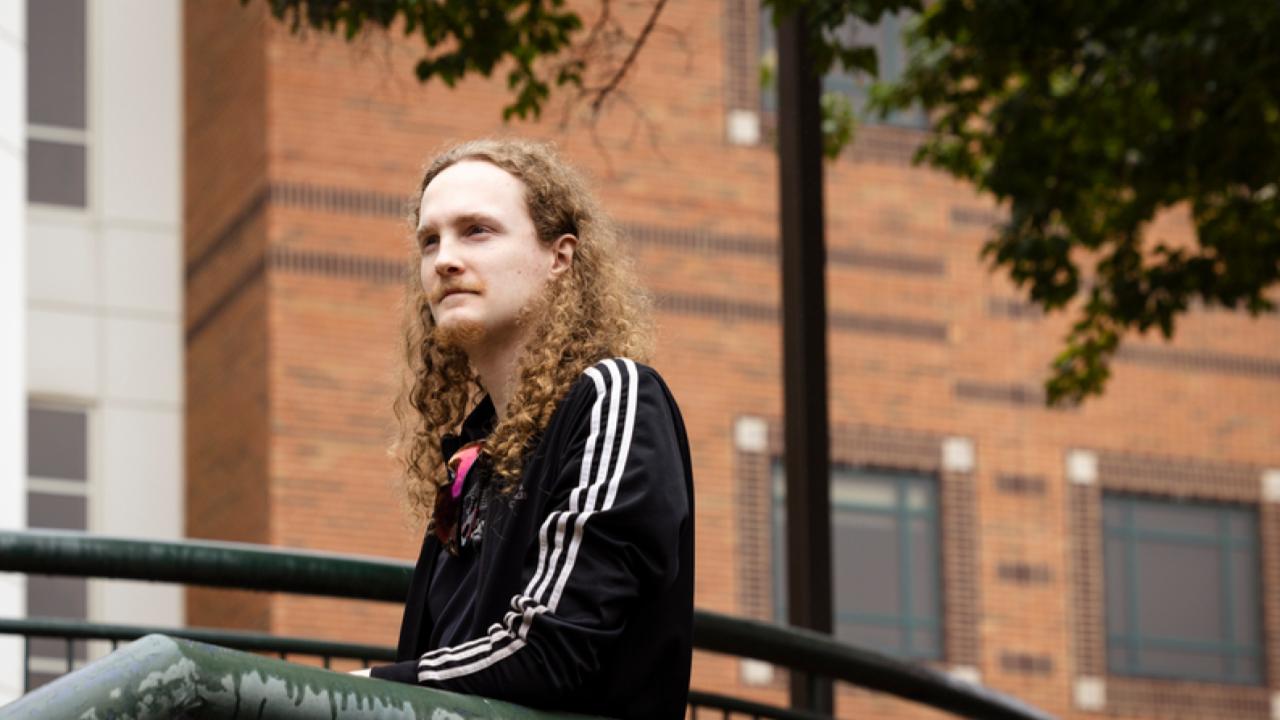
I would also like to thank Ron Aira, professional photographer for the Office of University Branding, for the spectacular shots! I especially like the side profile photo, as it really encapsulates the feeling of being an Engineer; always looking forward to the next great thing!
I, of course, would like to thank my mentor, Mohamed Gebril, Associate Professor of Cyber Security Engineering at George Mason University – College of Engineering and Computing. He has helped guide me along this journey, allowing me to reach even greater heights than I thought imaginable!
Finally, I would like to thank Jordan Mason, PMP of the Commonwealth Cyber Initiative Northern Virginia node, and my team, Joshua French and Logan Breckenridge. Together, we are able to build and create more amazing advancements than I thought even a few months ago!
CCI Conference 2025
What a great event! Thank you so much to the Commonwealth Cyber Initiative (CCI) for hosting the team from George Mason University in the Omni Richmond Hotel.
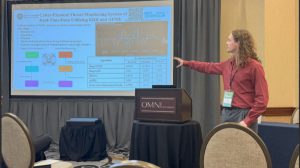
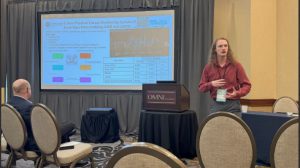
It was such a blast, from the talk I hosted about my groundbreaking Fuzzy Logic model (which beat out every other model we tested it against) and our group research utilizing Splunk and ElasticSearch with drone telemetry data for EDR utilizing AI and ML models, to the amazing talk done by Prisma AIRS by Palo Alto Networks and the student panel. Our team here at GMU is very excited to come next year and show off all of the great work we’re up to, so we hope to see you all there!
Here are some of the amazing photos taken by our professional GMU photographer during my talk and after our group poster session.
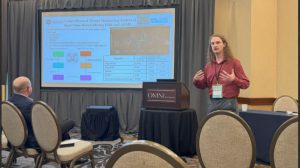
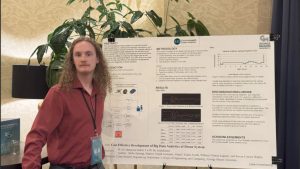
Excited for CCI Conference 2025
Thanks to the amazing research we’ve been doing at George Mason University under Dr. Mohammed Gebril, I have been invited to speak at the Commonwealth Cyber Initiative (CCI)‘s Symposium! My research has been focused on utilizing Artificial Intelligence and Machine Learning Algorithms for Endpoint Detection and Response with drone telemetry data.
This research is vital as drones become more widely applicable both within the industry and in everyday life, as it provides a method of ensuring anomalous flight behaviors are logged, caught, and responded to before anyone gets hurt! Impressively, we have developed a very sophisticated model that outperforms other AI/ML tools on the market, which I will be covering in my talk on April 15th.
I would like to thank the Commonwealth Cyber Initiative (CCI) for providing us both the ability to do this research and the opportunity to present it! It has been an honor and a pleasure to work alongside William Leppert, Stephen Antezana, Abi Austin, and Sneha Apsangi for this research. While there is always more to do when trekking the path of progress, I’m very proud of the work we have done as a team and I would love to continue this research 😊 !
GMU CyberSlam 2025
Today’s event was a blast! Helping out High School students build and fly drones around was so much fun. The kids really learned a lot too, so overall a great use of time and resources!
GMU Innovation Week Presentation
I’m so excited that the team will get to present our work on the 19th! We’ve made amazing progress with our drone telemetry analysis. It will be amazing to see what everyone else has been up to as well!
Thank you everyone who has worked so hard to get this done! Team Members: William Leppert, Stephen Antezana, Abi Austin, and Sneha Apsangi.
Projects and Work
CYSE 587 Team C Coordinator
During the Fall 2025 semester, I was the co-leader of Team C, where we worked to protect privacy within UAS technology. Our project was called “Protecting Individual Privacy from Intrusive Drone Surveillance”, which you can read more about here!
As the co-leader of the team, I was responsible for coordinating the other co-lead to plan meetings, schedule deliverables, and meet with team members to make the best project possible! Below are some of the tasks I was responsible for and what I did during the semester.
- Did in-depth STRIDE (security) and LINDDUN (privacy) analyses of our solution to ensure we caught and addressed as many potential concerns as possible
- Made many different models illustrating our system and attack vectors, utilizing both DFDs and MITRE Attack Flows
- Tightened up the shark tank presentation, where I added supporting graphics, more engaging slide designs, and external content such as the sources linked in the presentation
- Recorded and presented sections of the presentation, specifically around the threat space our solution was working within
- Helped organize team files within our Microsoft Teams workspace
- Coordinated with members and helped out with minor tasks, such as helping to set up our AirSim environment for the demo and testing
- Kept track of action items and work progress on our Microsoft Loop during meetings
CYSE 492-493 Senior Design Project Manager
For my senior design, I am working with a very strong team of fellow senior Cybersecurity students. We are building an AI-Enhanced Scenario Generator for the game “Backdoors & Breaches”, for the purpose of training students and employees through a more fun, engaging, and tailored experience.
The use case is for a teacher or employer to feed our model organizational information, such as the server infrastructure or how their computer network is laid out, so that the model can generate realistic and organizationally-specific scenarios for students and employees to train with.
Currently, we are almost done with the tool itself and are going to work on testing it through a study we’ve designed to be implemented within classes next semester. We will see how students engage with the AI-generated scenarios versus scenarios we make and no scenarios within the game. With this data, we will be able to see the efficacy of the tool, allowing us to make any final tweaks before we present our final work!
In this project, I have two main roles. My first role is to lead the team to success by providing the organizational, structural, and technical support all team members need for their tasks. This means I ensure everyone knows when our meetings are, what is required of them for the meetings, what they should work on and the priority of different tasks, as well as helping out with the tasks themselves.
On the organizational and structural side, I manage our group Discord so we can all communicate clearly and know what to do. I run the calendar, announce meeting times, and make sure everyone has what they need to succeed.
On the technical side, I’ve helped during the early stages research ideas our sponsor and mentor brought up to see how they could best be utilized within the project. This includes our RAG database, which our back-end model utilizes to pull data for the scenarios it generates. I also helped set up the validation study as well as iterate on our UI for the front-end.
My other role is to coordinate between the team, our mentor, and our sponsor. This means I not only set up the meetings, but I also run them. I show off our slides, explain important breakthroughs, what we’re working on, and tie all of this back to our overarching project plan. I also actively listen to feedback, so the team can experiment with different ideas and methods.
I have really enjoyed the first half of the project, and look forward to bringing it home during our final semester! It has been a blast working with my friends, and I am very excited to show off our tool once it is complete.
SYST 230 PaperTrail Encryption Method
During my Systems 230 class with Dr. Amissah, my team developed an application that allows users to physically store cryptographically-secure information. We called our application “PaperTrail”, and it was one of the most interesting projects I had worked on.
The base concept was simple, we wanted a way to securely store information that had a level of physicality to it so it couldn’t be wiped or otherwise lost from digital means. We tried a variety of different ideas, until coming up with the final iteration.
Our system was quite simple, only having two functions, encryption and decryption. For encryption, the user would provide the file they would want to encrypt as well as a key used for the encryption. Our system was able to take in a variety of file types, including common image and text files, and encrypt them using a strong encryption scheme. Once encrypted, the program would provide rows and columns of QR codes, each including some small portion of the information in its encrypted state. This could be printed out and stored, making it easier to keep track of.
To decrypt, the user would have to have the key used during the encryption as well as the QR codes. The program would take the provided key and attempt to scan the QR codes, decrypting back into the original file ONLY when provided the correct key. From our testing, we were able to successfully encrypt and decrypt image and text files of varying sizes with trivial data loss.
We presented our work to Dr. Amissah and the rest of our class, where we got top marks due to the innovative nature, strong results, and sleek design of our solution. You can view the GitHub here, where you can download the tool and play with it yourself.
Here is our final project report that goes into further detail about our application:
ENG 107 Helmet Project
During my freshman year at George Mason University, I was lucky to have a class with Dr. Peixoto around the fundamentals of Engineering. While we had many different projects in the class, from making tools out of trash to inventions that would help us from our day-to-day, my favorite one was the team design project.
Each team consisted of around five students, and had to design, prototype, iterate, and ultimately deliver a fully engineered solution to a problem the team selected. Since the people on my team were big into urban adventuring and exploring the great outdoors, we sought to make the ultimate safety helmet.
Our helmet contained a variety of useful features, including a GPS tracker managed through an app, multiple different lights, and plenty of cushioning to protect from damage. Each member of the team focused on a different aspect of the helmet, ultimately delivering on our goal.
In the end, one of the team members kept the helmet and reportedly used it, saying that the multiple lights was actually super helpful. Not only did it have a three-mode front light, but also had lights around the sides and back to help others find them easier. This in combination with the GPS tracker kept them safe while exploring, allowing them to enjoy without fear of injury.
Below is a photo of the helmet taken by the group member responsible for the electrical wiring of the lights:
– – – – – – – – – – – – – – – – –
GMU Drone Research
Since December 2024, I have been working for George Mason University through the Commonwealth Cyber Initiative (CCI). My research has centered around drone technology, specifically around anomaly detection and automated flight behaviors.
My first project involved creating a machine-learning model that would more accurately detect anomalous flight behaviors when compared against traditional models. I utilized AirSim, a virtual flight environment developed by Microsoft and widely used in industry, and some custom Python scripts to gather ~20,000 virtual drone telemetry packets into my custom Splunk environment. I then used these packets as the baseline for my model, helping it to delineate between nominal and anomalous flight readings.
I presented my work at the CCI 2025 conference at the Omni hotel in Richmond, Virginia to a packed room. My individual research tied into the broader research my group was doing, helping to make our poster even better as well!
After that, I moved onto a new project focused around teaching cybersecurity students. The goal was to develop a series of fun challenges, each involving drones and a complex cybersecurity topic. The challenges ranged from automated flight through encrypted gates to object detection and response. This project is still in the works, but my team and I are very excited to have students from universities all around Northern Virginia compete for the ultimate prize!
I plan to present my work on these challenges at the CCI 2026 conference. More information will come out as the date gets closer, but I look forward to seeing everyone there!
OnAir Cyber Network Coordinator
Cyber OnAir Coordination
As the coordinator for the entire Cyber onAir Network of Hubs, I fulfil may roles. I am responsible for ensuring that everything Cybersecurity on the platform goes smoothly, from the overarching structure all the way down to curation and moderation guidelines.
At the network level, I lead the way when it comes to establishing new hubs, making deals with sponsors, and networking with organizations. Currently, I am looking for a lead university and lead association to support these endeavors. If your organization is interested, please reach out to me using my email.
I work with the hub advisory board, other coordinators, our curators, and the broader Cyber onAir team to ensure consistency and quality across the network. It is vital to me that our values are being upheld all the way through, as we do not compromise on our principles or morals.
Network Coordination
In regard to the Cyber hub itself, I help out wherever I am needed. Whether it is on the curation side or the aircasting side, I do it all! My main responsibility is to ensure smooth sailing at all times, so I work very closely with everyone else on the team to keep the platform open and accessible.
During the infancy of the hub, I spent a lot of time making posts, making hubs, recording aircasts, and teaching members of the team to do the same. As the platform grows, I spend more time onboarding new members, ultimately building a strong team to support day-to-day operations!
Currently, I am working to expand the team for the hub, as the main bottleneck is hours in the day. If you are someone who is passionate about providing others information and opportunities, isn’t afraid to ask questions, and is willing to sit down and talk with people regularly, please reach out to me!
Curation Coordination
I care very deeply about providing information as freely and openly as possible, as I believe information is a human right. As such, I work with my team of curators to aggregate the best content from other hubs and highlight it here, as well as from the internet, professionals, and other media sources. We spend a great deal of time reaching out to researchers, industry professionals, and other highly-knowledgeable people to bring the best content to the platform, so that everyone can be better informed!
The greatest thing about the Cyber hub is its ability to adapt, just like the field of cybersecurity. The constant game of cat and mouse has always intrigued me, so being able to capture the constantly evolving nature through our posts keeps us on our feet! It is thanks to the diligent work of our curators that this platform is as informative as it can be.
OnAircast Coordination
When it comes to aircasts for the Cyber Network of Hubs, I do quite a lot. I diligently work with our team of aircasters to develop and run the most informative livestreamed cybersecurity content on the internet.
We are constantly looking for new series ideas, members of the team, panelists, and guests, so please reach out if you are interested!
Currently, we are focused around George Mason University and its departments that talk about cybersecurity, but we plan to expand out massively in the future!
Cybersecurity@GMU
This is my personal aircast series, where I cover everything within the GMU CYSE department. Here are some ideas I have for the series, so please reach out if you are interested in talking!
- Speak to student and staff researchers about their work, its implications, and how it benefits the lives of others
- Discuss with professors about a class they teach, the topic’s significance, and how this information better prepares students for the real-world
- Gather a panel of CYSE administrators, students, and staff to discuss the current curriculum, how the field is evolving, and how the University is going to beat the curve
- Find out more from the top brass of the department how big decisions are made, how people can make their voices heard, and how the department adapts to fit the expectations of the real-world