Summary
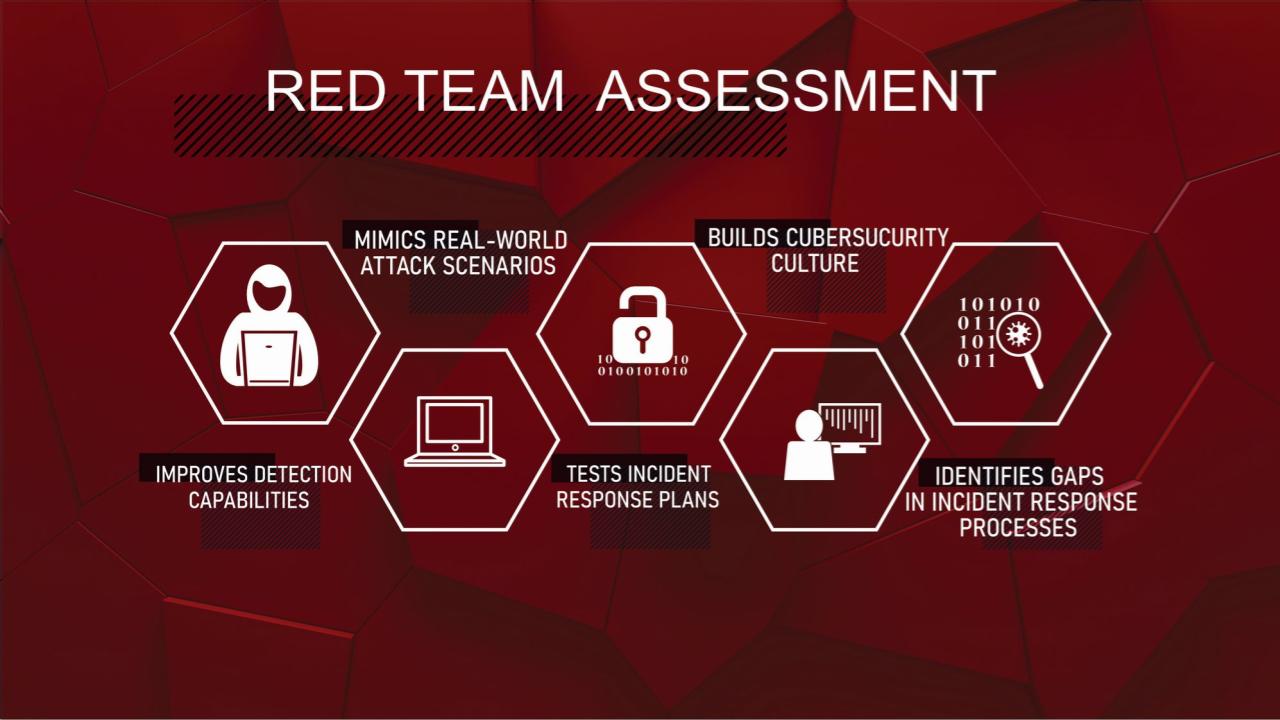
A cybersecurity red team’s primary function is to simulate real-world cyberattacks to proactively identify weaknesses in an organization’s security posture before malicious actors can exploit them.
They act as ethical adversaries, using the same tactics, techniques, and procedures (TTPs) as actual threat actors to provide a realistic assessment of the organization’s defensive capabilities.
OnAir Post: Red Team
About
Source: Gemini AI Overview – 12/4/25
Key functions of a cybersecurity red team include
- Vulnerability Discovery: Red teams actively probe systems, networks, applications, and even physical premises to uncover hidden or unknown vulnerabilities that traditional security audits or automated scans might miss.
- Testing Security Controls: They evaluate the effectiveness of existing security measures, such as firewalls, intrusion detection systems (IDS), and access controls, to ensure they function as intended under adversarial conditions.
- Assessing Incident Response Capabilities: A key function is to test the internal security team’s (the blue team’s) ability to detect, respond to, and mitigate a security incident in real-time. This helps improve the organization’s incident response plans and procedures.
- Adversary Emulation: Red teams mimic the behavior of specific, sophisticated threat actors or advanced persistent threats (APTs) to provide targeted and relevant testing scenarios.
- Social Engineering: They test the human element of security by conducting controlled social engineering attacks (e.g., phishing campaigns, pretexting, or physical tailgating attempts) to assess employee security awareness and training effectiveness.
- Physical Security Testing: In some cases, red teams may attempt to gain unauthorized physical access to secure areas like server rooms to test the robustness of physical safeguards.
- Providing Actionable Insights and Recommendations: After an engagement, the red team provides a detailed report to management and the blue team, outlining the discovered vulnerabilities, the attack paths used, and specific, actionable recommendations for improvement.
- Enhancing Security Awareness and Training: The findings from red team exercises provide tangible examples of real-world threats, which can be used to improve security training programs and foster a more security-conscious culture within the organization.
- Ensuring Regulatory Compliance: Regular red team exercises help organizations meet stringent industry standards and regulatory requirements by demonstrating a proactive approach to risk management.
Ultimately, the red team’s work helps organizations build a more resilient and adaptive security posture by providing a battle-tested understanding of their weaknesses from an attacker’s point of view.