Summary
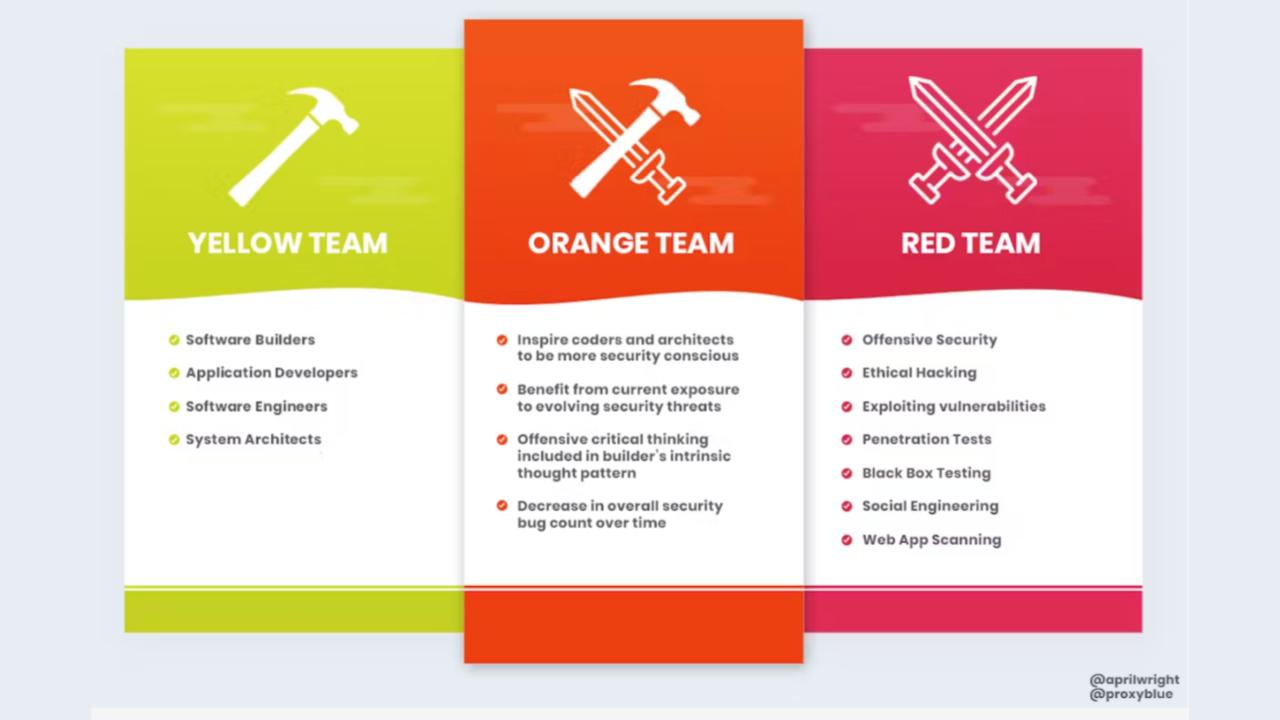
The primary functions of a cybersecurity Orange Team are to bridge the gap between the development (Yellow) and offensive security (Red) teams by educating developers on potential threats and vulnerabilities and promoting secure coding practices throughout the software development lifecycle.
Essentially, the Orange Team is a collaborative function that shifts security from a reactive approach (fixing issues after a breach or a red team exercise) to a proactive one, embedding security into the very foundation of an organization’s technology and culture.
OnAir Post: Orange Team
About
Source: Gemini AI Overview – 11/6/2025
Key functions of a cybersecurity Orange Team include:
- Educating Developers: They provide training to the Yellow Team (developers/architects/builders) on security best practices, common vulnerabilities, and potential threats.
- Fostering an Attacker Mindset: The Orange Team helps the Yellow Team “think like a hacker” so developers can spot potential security bugs and weaknesses during the development phase, rather than after deployment.
- Integrating Security into the SDLC: They assist in incorporating security testing tools (such as SAST, DAST, and IAST) and practices into the Software Development Lifecycle (SDLC), providing valuable and speedy feedback on code quality and security defects.
- Facilitating Communication: The Orange Team acts as a conduit, ensuring ongoing and structured interactions and knowledge sharing between the Red Team’s offensive experts and the Yellow Team’s builders.
- Reducing Attack Surface: By proactively addressing code vulnerabilities and design flaws during development, the Orange Team helps decrease the number of security bugs in applications before they are released into production.
- Threat Modeling Assistance: They can assist the Yellow Team with threat modeling by sharing active cyber threat intelligence on known Tactics, Techniques, and Procedures (TTPs) used by attackers.